
Mold remediation in Jacksonville, FL
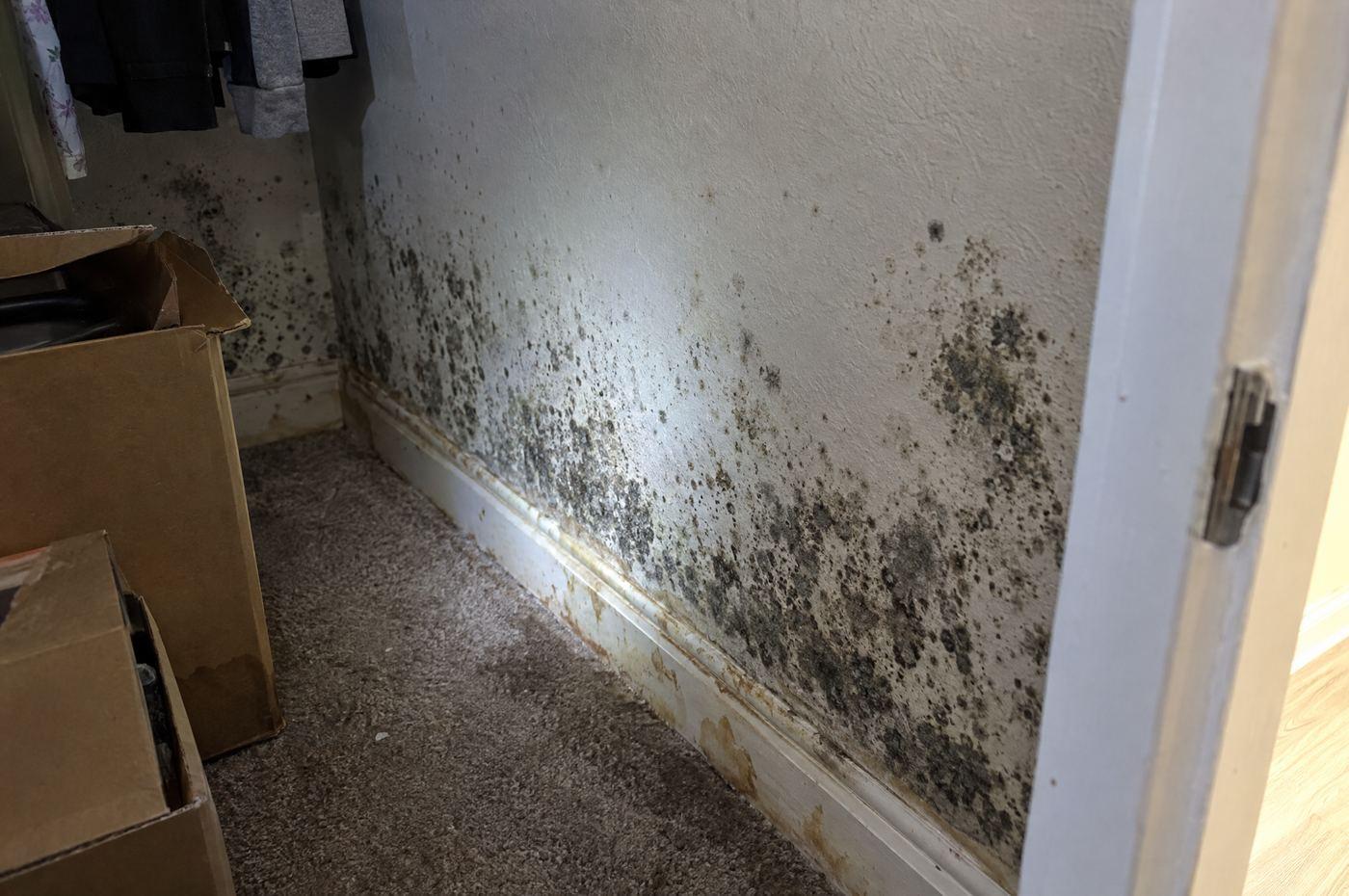
Mold grows where water stays: behind a slow AC drip, under a slab leak, in walls after a storm. In Jacksonville's humid air, materials that stay wet more than a day or two give it a head start.
The line is open 24/7 and connects you with an independent local company.
Right now
- 1Find and stop the water first. Mold comes back if the source keeps feeding it.
- 2Don't run the AC system if you suspect mold inside it.
- 3Don't sand, scrape or dry-brush moldy drywall; that spreads spores.
- 4Photograph the area with a tape measure in the frame to show its size.
What's going on
Florida licenses mold work. Remediation of more than 10 square feet needs a licensed mold remediator, and a separate licensed mold assessor does testing. One company may not do both on the same home within 12 months.
Florida draws its licensing line at 10 square feet: assessing or remediating more mold than that is licensed work under Chapter 468, Part XVI. Look up any license on the state DBPR portal, and remember that the company that tests your home can't be the one that cleans it within 12 months.
Water category: Depends on the water that caused it.
What changes the size of the job
- Size of the affected area (Florida's line is 10 square feet)
- Whether walls, ceilings or the AC system are involved
- The water source and whether it's fixed
- Containment needed to protect the rest of the house
No prices here: only a written estimate from the company that sees the house can give one.
How drying usually goes
- 1
Find the moisture
Meters and a thermal camera locate the wet materials feeding the growth.
- 2
Contain
Plastic barriers and air filtration keep spores in the work area.
- 3
Remove and clean
Moldy drywall, insulation and carpet are removed; hard surfaces are cleaned.
- 4
Filter the air
HEPA air scrubbers and HEPA vacuums capture loose spores during the work.
- 5
Dry and confirm
Materials are dried and checked before walls are closed. A separate licensed assessor may do clearance testing.
Jacksonville facts for this problem
In Florida, mold assessment and mold remediation of more than 10 square feet are licensed jobs (Fla. Stat. 468.8411 and 468.8413). The same company may not assess and then remediate one house within 12 months (468.8419), so a mold test and a mold cleanup should come from two different licensees.
Source: Fla. Stat. 468.8411, 468.8413 and 468.8419Any Florida contractor or mold license can be checked by name or number on the Florida DBPR license search.
Source: Florida DBPR license searchEPA guidance: get wet materials and belongings dry within 24 to 48 hours, or mold can start.
Source: EPA: A Brief Guide to Mold, Moisture and Your HomeEPA guidance: hold indoor relative humidity under 60 percent, and between 30 and 50 percent when you can.
Source: EPA: A Brief Guide to Mold, Moisture and Your HomeJune through September average 28.81 in. of rain at the Jacksonville Area station, out of 53.40 in. a year (1991-2020 normals).
Calculated by Jax Water Damage Hub: ACIS daily record, Jacksonville Area (calculated)About 40% of homes in Jacksonville's 31 residential ZIP codes were built before 1980, by Census estimates; the median home in 32206 dates from 1947 and in 32222 from 2012.
Calculated by Jax Water Damage Hub: U.S. Census Bureau, ACS 5-year 2020-2024 (calculated)The St. Johns set record flood stages at many Duval County gauges during Hurricane Irma, flood water in city streets reached 5 feet deep in places, and Jacksonville International Airport logged 9.20 inches of rain.
Source: National Hurricane Center: Hurricane Irma report
Insurance, in general terms
Many policies cap mold coverage or tie it to a covered water loss, and mold from long-term leaks or humidity is often excluded. Read the mold section of your policy.
Questions
- Do I need mold testing in Jacksonville?
- Not always. The EPA's page on mold testing says that in most cases sampling is unnecessary when mold is visible, and no federal limits exist to test against. Testing helps when there's a smell but no visible growth, or to confirm cleanup. In Florida, testing for hire is done by a licensed mold assessor.
- Can the company that tests my home also remove the mold?
- Florida law (Fla. Stat. 468.8419) bars a mold assessor from remediating a home it assessed within the past 12 months, and the reverse, with a narrow exception for certain Division I contractors.
- How big a mold patch can I clean myself?
- EPA guidance puts it at less than about 10 square feet, roughly 3 feet by 3 feet. Larger growth, mold in the AC system, or mold after sewage or flood water should go to a professional.
- How do I check a mold remediator's license?
- Search the company or person by name or license number on the Florida DBPR license portal before work starts.
Other water problems
Mold remediation in Jacksonville? The line is open now.
(904) 352-8877