
AC leak water damage in Jacksonville
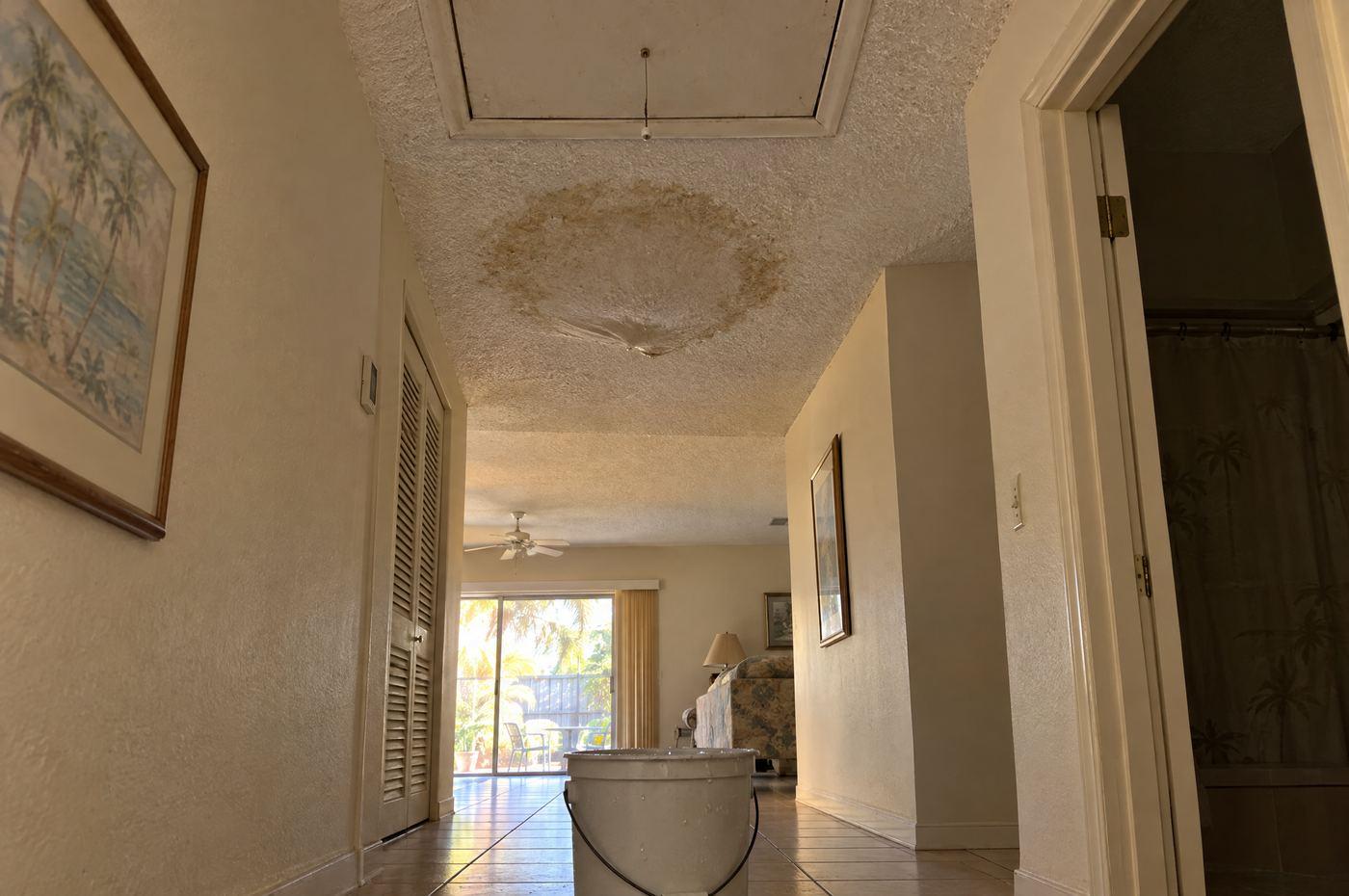
An air conditioner pulls water out of the air as it cools. That water drips into a pan under the indoor coil and runs out through a thin PVC condensate line. When the line clogs with algae or the pan rusts through, the water has nowhere to go but the ceiling below an attic unit or the floor around a closet unit.
The line is open 24/7 and connects you with an independent local company.
Right now
- 1Turn the thermostat to off so the unit stops making water.
- 2Put a bucket under the drip. If the ceiling sags, poke a small hole in the low spot to drain it into the bucket so the panel doesn't fall.
- 3Look at the float switch or the drain pan if you can reach it safely. A full pan points to a clogged line.
- 4Take dated photos of the ceiling, the closet floor and the unit for your records.
What's going on
In Jacksonville the cooling season is long, so a slow drip can run for weeks before anyone sees it. By then the drywall, insulation and the wood around the air handler may be soaked, and the mold window has long passed.
Jacksonville's rainy season runs June to November, which is also when air conditioners make the most condensate. A clogged line that overflows in July can keep dripping into the same ceiling until fall. When drying starts, check today's dew point on the weather page: on muggy days, opening windows adds moisture instead of removing it.
Water category: Usually Category 1 at first; it degrades the longer it sits.
What changes the size of the job
- Whether the leak came through a ceiling (more tear-out) or onto a floor
- How many days or weeks the drip ran before it was found
- Whether insulation in the attic got wet
- Whether mold has already started on drywall or framing
No prices here: only a written estimate from the company that sees the house can give one.
How drying usually goes
- 1
Trace the wet area
Moisture meters and a thermal camera show how far the water spread across the ceiling, into wall cavities and under flooring around the closet.
- 2
Open what can't dry
Soaked ceiling drywall and wet insulation usually come out. Drywall that tests dry is left in place.
- 3
Dry the structure
Dehumidifiers and air movers run in the affected rooms, and the attic space around the unit may get its own drying setup.
- 4
Check for mold
Framing and the back of drywall are checked for growth. Florida treats mold over 10 square feet as licensed work.
- 5
Readings until dry
Moisture readings are taken each visit until every material reaches its dry standard, then repairs can start.
Jacksonville facts for this problem
The City of Jacksonville says most flooding in the city comes in the rainy season, June to November.
Source: City of Jacksonville: Floodplain ManagementJune through September average 28.81 in. of rain at the Jacksonville Area station, out of 53.40 in. a year (1991-2020 normals).
Calculated by Jax Water Damage Hub: ACIS daily record, Jacksonville Area (calculated)EPA guidance: hold indoor relative humidity under 60 percent, and between 30 and 50 percent when you can.
Source: EPA: A Brief Guide to Mold, Moisture and Your HomeEPA guidance: get wet materials and belongings dry within 24 to 48 hours, or mold can start.
Source: EPA: A Brief Guide to Mold, Moisture and Your HomeIn Florida, mold assessment and mold remediation of more than 10 square feet are licensed jobs (Fla. Stat. 468.8411 and 468.8413). The same company may not assess and then remediate one house within 12 months (468.8419), so a mold test and a mold cleanup should come from two different licensees.
Source: Fla. Stat. 468.8411, 468.8413 and 468.8419JEA says replacement costs from the meter to the home, and inside it, are the customer's; the meter box is typically at the curb near the street.
Source: JEA: Water Service Line Verification Project
Insurance, in general terms
Policies often treat sudden water from an appliance or AC unit as covered while excluding repeated leaks over weeks, wear and tear, and the AC part that failed. Mold limits are common. Your declarations page and policy wording decide it, not this page.
Questions
- Why does my AC leak into the ceiling and not outside?
- The condensate line carries the water outside. When algae or debris blocks it, the pan under the coil fills and spills over, and gravity takes it into the ceiling or the closet floor below the unit.
- Is a wet ceiling under the AC an emergency?
- It can be. Wet drywall can drop without warning, and the EPA's 24 to 48 hour drying window for mold applies to ceilings too. Turn the unit off and catch the water first.
- Who fixes the AC and who fixes the water damage?
- Usually two different trades. An HVAC technician clears the line or replaces the pan. A water damage company dries the ceiling, walls and floors. Ask each for a written estimate.
Other water problems
AC and air handler leaks in Jacksonville? The line is open now.
(904) 352-8877